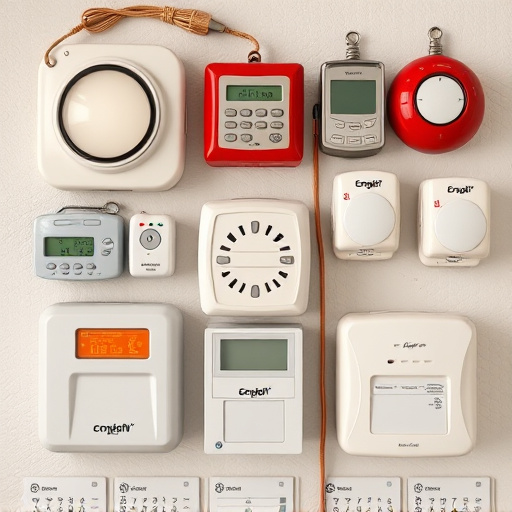
Panic alarms, with their powerful and distinct sounds, are vital tools for personal safety, capable of attracting attention up to 100 meters away. When choosing a panic alarm, prioritize a loud, cutting-through sound and consider adjustable carry distance settings tailored to your environment – shorter distances for home users, extended distances for remote areas. High-pitched, sharp bursts followed by lingering tones prove most effective in startingle bystanders. Compact, well-designed devices with omnidirectional sound projection offer better range. Testing different alarm tones ensures the most impactful signal for personal safety in emergencies.
Personal safety should never be taken lightly, and having a reliable panic alarm tool can make all the difference. In today’s world, understanding the importance of self-defense mechanisms is crucial. This article explores the multifaceted aspect of personal safety tools equipped with alarm functions, focusing on key features, carry distance, and their effectiveness in real-world scenarios. From recognizing critical situations to ensuring your safety is always within reach, discover why panic alarms are essential and how they work to ward off potential threats.
- Understanding Panic Alarms: When and Why They're Essential
- Key Features to Consider in Personal Safety Tools with Alarm Function
- Evaluating Carry Distance: Ensuring Your Safety is Never Out of Reach
- The Science Behind Effective Panic Alarm Sounds
- Real-World Applications: How Panic Alarms Can Make a Difference
Understanding Panic Alarms: When and Why They're Essential
Panic alarms are a crucial personal safety tool, designed to quickly alert others in an emergency situation. These devices emit a distinct and powerful sound that can carry a significant distance, ensuring help arrives promptly. Whether you’re alone at home or out for a walk, the sudden blast of a panic alarm can deter potential threats and attract attention from bystanders or nearby emergency services.
The essence of a panic alarm lies in its immediate impact. When activated, it serves as a loud signal that communicates distress without requiring any verbal communication. This is especially vital in situations where an individual might be immobilized or unable to speak due to shock or fear. The high-decibel sound acts as a powerful deterrent and can sometimes even prevent an attacker from proceeding, giving the person time to escape or summon aid.
Key Features to Consider in Personal Safety Tools with Alarm Function
When choosing personal safety tools equipped with an alarm function, several key features should top your list to ensure effectiveness and peace of mind. Firstly, consider the panic alarm sound—a loud, distinct signal that can attract attention quickly. A powerful siren or a series of sharp beeps are preferred as they can reverberate through dense areas, ensuring help arrives promptly.
Additionally, the carry distance of the alarm’s signal is vital. In an emergency, you want your tool to be able to trigger assistance from a safe distance. Longer carry distances ensure wider coverage, increasing the chances of rescue. Look for tools that offer adjustable settings to customize this feature according to your environment and personal comfort levels.
Evaluating Carry Distance: Ensuring Your Safety is Never Out of Reach
When evaluating personal safety tools with an alarm function, one crucial aspect is considering the carry distance. This refers to how far the device can effectively emit its panic alarm sound when activated. Ensuring your safety is never out of reach means selecting a tool that suits your daily activities and environment.
For instance, if you frequently travel long distances or work in remote areas, opt for tools with an extended carry distance. These devices are designed to provide a loud, piercing alarm that can alert nearby people or startle potential threats even from a distance. Conversely, those who primarily use their safety tools within the home may find shorter carry distances sufficient as they rely on the sound reaching family members or nearby windows and doors.
The Science Behind Effective Panic Alarm Sounds
The effectiveness of a panic alarm sound largely relies on its ability to startle and alert bystanders, which is why specific acoustic parameters are crucial. Research shows that high-pitched sounds carry further and are more noticeable than lower frequencies. A combination of sharp, sudden bursts followed by a lingering tone can create a powerful and effective alarm signal. This ensures that the sound travels a good distance, reaching potential helpers quickly. The volume and duration of the alarm should also be considered; a loud, prolonged sound can deter attackers and attract attention from safe distances.
Furthermore, the design and placement of an alarm device play a significant role in its carry distance. A compact, well-designed alarm with a built-in speaker that projects sound omnidirectionally will have better range than one with limited audio projection. Testing different alarm tones and volumes can help individuals choose the most impactful combination for their personal safety needs, ensuring maximum effectiveness during an emergency.
Real-World Applications: How Panic Alarms Can Make a Difference
In everyday life, personal safety tools equipped with alarm functions can be game-changers in dire situations. One of the most powerful features is the panic alarm sound, designed to attract immediate attention and deter potential threats. This high-decibel alert can carry a distance of up to 100 meters (depending on the model), ensuring that help arrives swiftly when someone is in distress. Whether it’s a personal emergency or a situation where someone needs rapid assistance, these alarms prove invaluable.
For instance, consider a scenario where a person feels threatened during a late-night walk home. Activating their panic alarm can send out a loud signal, signaling to passersby and nearby authorities that they need help. The carry distance ensures that even in quiet neighborhoods or remote areas, the alarm’s sound will be heard, potentially preventing harm and enabling swift intervention.
Personal safety tools with alarm functions have proven to be invaluable in various situations, from everyday self-defense to emergency situations. By understanding when and why panic alarms are essential, considering key features, evaluating carry distance, and recognizing the science behind effective sounds, individuals can empower themselves to stay safe. The real-world applications of these tools underscore their importance in today’s world, making them a game-changer for personal security.